
"Two years after the CPTPP came into force, we wanted to examine how it engaged Indigenous rights, economic participation, and inclusive trade across the Asia Pacific, and what it means for the future of Indigenous international trade and investment."

Dr. Scott Harrison
Connecting Histories, Shaping Futures
"Two years after the CPTPP came into force, we wanted to examine how it engaged Indigenous rights, economic participation, and inclusive trade across the Asia Pacific, and what it means for the future of Indigenous international trade and investment."
Dr. Scott Harrison
Connecting Histories, Shaping Futures
Free trade agreements have long shaped global economic relations, yet they have rarely been designed with Indigenous Peoples in mind. This project, co-authored by Dr. Scott Harrison and Robin Asgari, examines the Comprehensive and Progressive Agreement for Trans-Pacific Partnership (CPTPP) through the lens of Indigenous rights, economic participation, and inclusivity, exploring how international trade frameworks intersect with Indigenous law, governance systems, and development priorities. By situating Indigenous Economies within the broader Asia Pacific trade architecture, this work highlights both the limitations of existing agreements and the emerging opportunities for more equitable, Indigenous-informed approaches to international trade and investment.
Free trade agreements have long shaped global economic relations, yet they have rarely been designed with Indigenous Peoples in mind. This project, co-authored by Dr. Scott Harrison and Robin Asgari, examines the Comprehensive and Progressive Agreement for Trans-Pacific Partnership (CPTPP) through the lens of Indigenous rights, economic participation, and inclusivity, exploring how international trade frameworks intersect with Indigenous law, governance systems, and development priorities. By situating Indigenous Economies within the broader Asia Pacific trade architecture, this work highlights both the limitations of existing agreements and the emerging opportunities for more equitable, Indigenous-informed approaches to international trade and investment.
Key Insights
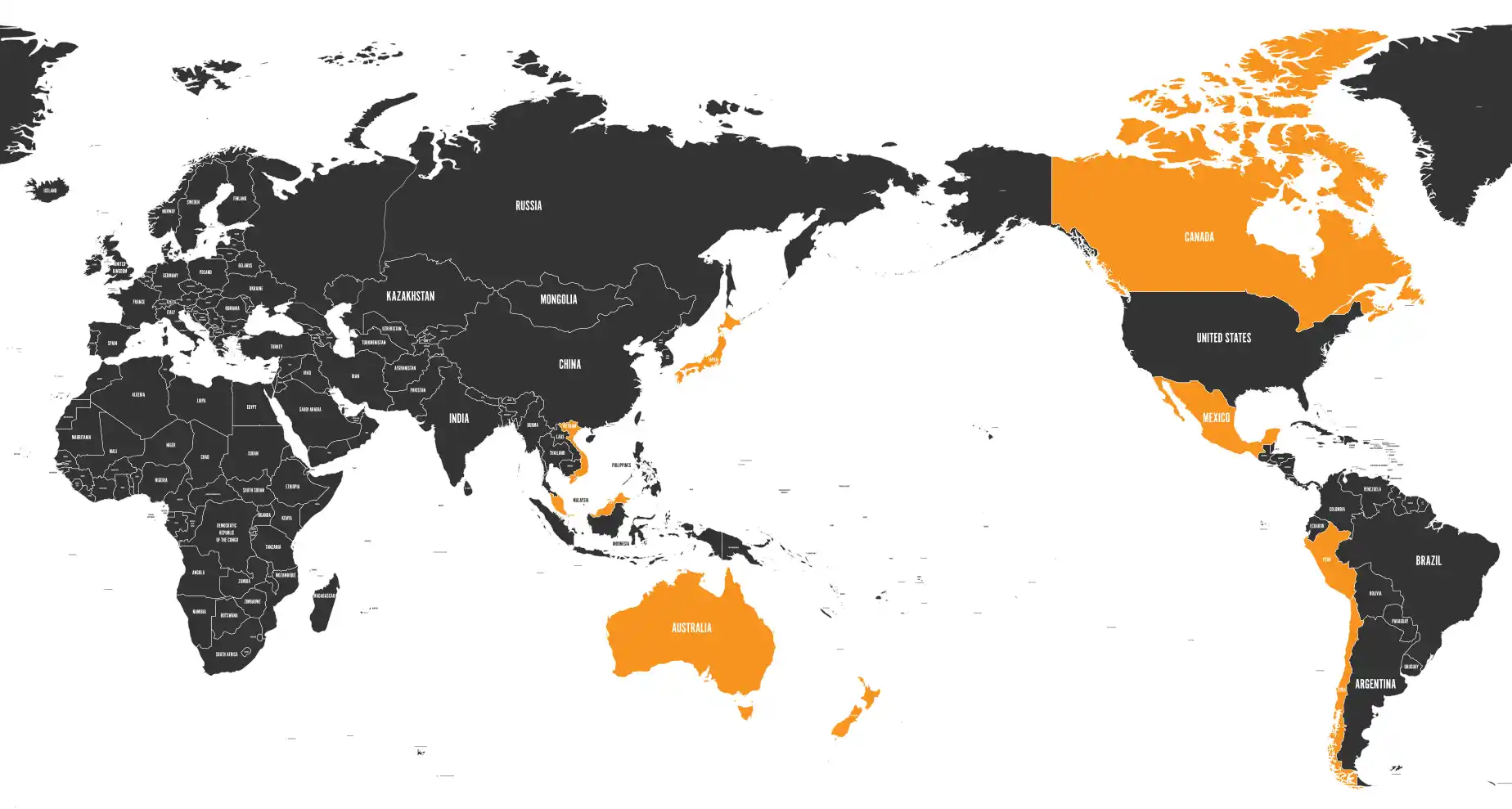
The CPTPP marks a modest but meaningful shift in how international trade agreements acknowledge Indigenous Peoples, most notably through its preambular recognition of Indigenous rights, cultural diversity, and inclusive trade. While these references are not legally binding, they set an important normative tone that creates space for governments and Indigenous communities to pursue more equitable trade outcomes during implementation. The analysis demonstrates that Indigenous rights and international trade law have historically evolved in isolation from one another. This disconnect continues to generate tensions between economic liberalization and Indigenous self-determination across CPTPP member economies.
Comparative case studies from Canada, Aotearoa/New Zealand, Chile, Japan, and Malaysia reveal significant variation in how Indigenous rights are recognized, protected, and operationalized within domestic (non-Indigenous) legal systems and trade policy. These differences present both risks and opportunities: while weak legal protections and investor-state dispute mechanisms can undermine Indigenous rights, Indigenous-led engagement, co-developed policy approaches, and improved economic data offer pathways toward more inclusive trade regimes. Ultimately, the research underscores that meaningful Indigenous participation, not symbolic inclusion, is essential for ensuring that international trade contributes to long-term Indigenous economic well-being, sustainability, and self-determination.
Key Insights
The CPTPP marks a modest but meaningful shift in how international trade agreements acknowledge Indigenous Peoples, most notably through its preambular recognition of Indigenous rights, cultural diversity, and inclusive trade. While these references are not legally binding, they set an important normative tone that creates space for governments and Indigenous communities to pursue more equitable trade outcomes during implementation. The analysis demonstrates that Indigenous rights and international trade law have historically evolved in isolation from one another. This disconnect continues to generate tensions between economic liberalization and Indigenous self-determination across CPTPP member economies.
Comparative case studies from Canada, Aotearoa/New Zealand, Chile, Japan, and Malaysia reveal significant variation in how Indigenous rights are recognized, protected, and operationalized within domestic (non-Indigenous) legal systems and trade policy. These differences present both risks and opportunities: while weak legal protections and investor-state dispute mechanisms can undermine Indigenous rights, Indigenous-led engagement, co-developed policy approaches, and improved economic data offer pathways toward more inclusive trade regimes. Ultimately, the research underscores that meaningful Indigenous participation, not symbolic inclusion, is essential for ensuring that international trade contributes to long-term Indigenous economic well-being, sustainability, and self-determination.


View Article
This article situates Ingenious international trade within the evolving landscape of Asia Pacific economic integration, using CPTPP as a case study to examine how trade agreements can both constrain and enable Indigenous economic participation. Informed by insights from Indigenous leaders, legal scholars, and policy practitioners across multiple jurisdictions, the analysis reflects collaborative knowledge-sharing that helped shape its comparative and forward-looking perspective.
Harrison, Scott M., and Robin Asgari. “International Trade Inclusivity: The CPTPP and Indigenous International Trade and Investment.” Asia Pacific Foundation of Canada, December 17, 2020.
View Article
This article situates Ingenious international trade within the evolving landscape of Asia Pacific economic integration, using CPTPP as a case study to examine how trade agreements can both constrain and enable Indigenous economic participation. Informed by insights from Indigenous leaders, legal scholars, and policy practitioners across multiple jurisdictions, the analysis reflects collaborative knowledge-sharing that helped shape its comparative and forward-looking perspective.
Harrison, Scott M., and Robin Asgari. “International Trade Inclusivity: The CPTPP and Indigenous International Trade and Investment.” Asia Pacific Foundation of Canada, December 17, 2020.

Latest projects
Paradiplomacy
Indigenous Internationalism
Democratic Diplomatic Middle Grounds
Theorising and expanding the role of domestic societies in paradiplomatic relations

Paradiplomacy
Indigenous Internationalism
Democratic Diplomatic Middle Grounds
Theorising and expanding the role of domestic societies in paradiplomatic relations
Asia/Indo-Pacific
Japan-Canada Research and Policy Network
Exploring new horizons in trade, diplomacy, media, and innovation

Asia/Indo-Pacific
Japan-Canada Research and Policy Network
Exploring new horizons in trade, diplomacy, media, and innovation